
Rental Car Insurance Coverage : Everything You Need to Know Before You Rent a Vehicle
Rental Car Insurance Coverage : Renting a car is convenient for vacations, business trips, or temporary transportation. However, one of the biggest questions travelers face at the rental counter is whether they should purchase rental car insurance coverage.
Rental companies often offer several types of insurance, but understanding what each policy covers can help you avoid paying for unnecessary protection while ensuring you’re financially protected if an accident occurs.
This guide explains everything about rental car insurance coverage, including coverage types, average costs, benefits, exclusions, and ways to save money.
What Is Rental Car Insurance Coverage?
Rental car insurance coverage is a collection of optional protection plans offered by rental car companies or provided through your personal auto insurance policy or eligible credit card.
These coverages help protect you against expenses related to:
- Vehicle damage
- Theft
- Third-party liability
- Medical expenses
- Personal belongings
- Roadside emergencies
Instead of paying thousands of dollars after an accident, the right insurance can significantly reduce your financial responsibility.
Why Rental Car Insurance Matters
Even experienced drivers can face unexpected situations while driving in unfamiliar places.
Rental car insurance can protect you from:
- Accidental collisions
- Vehicle theft
- Storm or flood damage
- Vandalism
- Windshield damage
- Damage caused by falling objects
- Fire
- Animal collisions
Without adequate coverage, you could be responsible for expensive repair bills and additional rental charges.
READ ALSO : Best Car Insurance Companies in New York (2026) | Compare Quotes & Save
Types of Rental Car Insurance Coverage
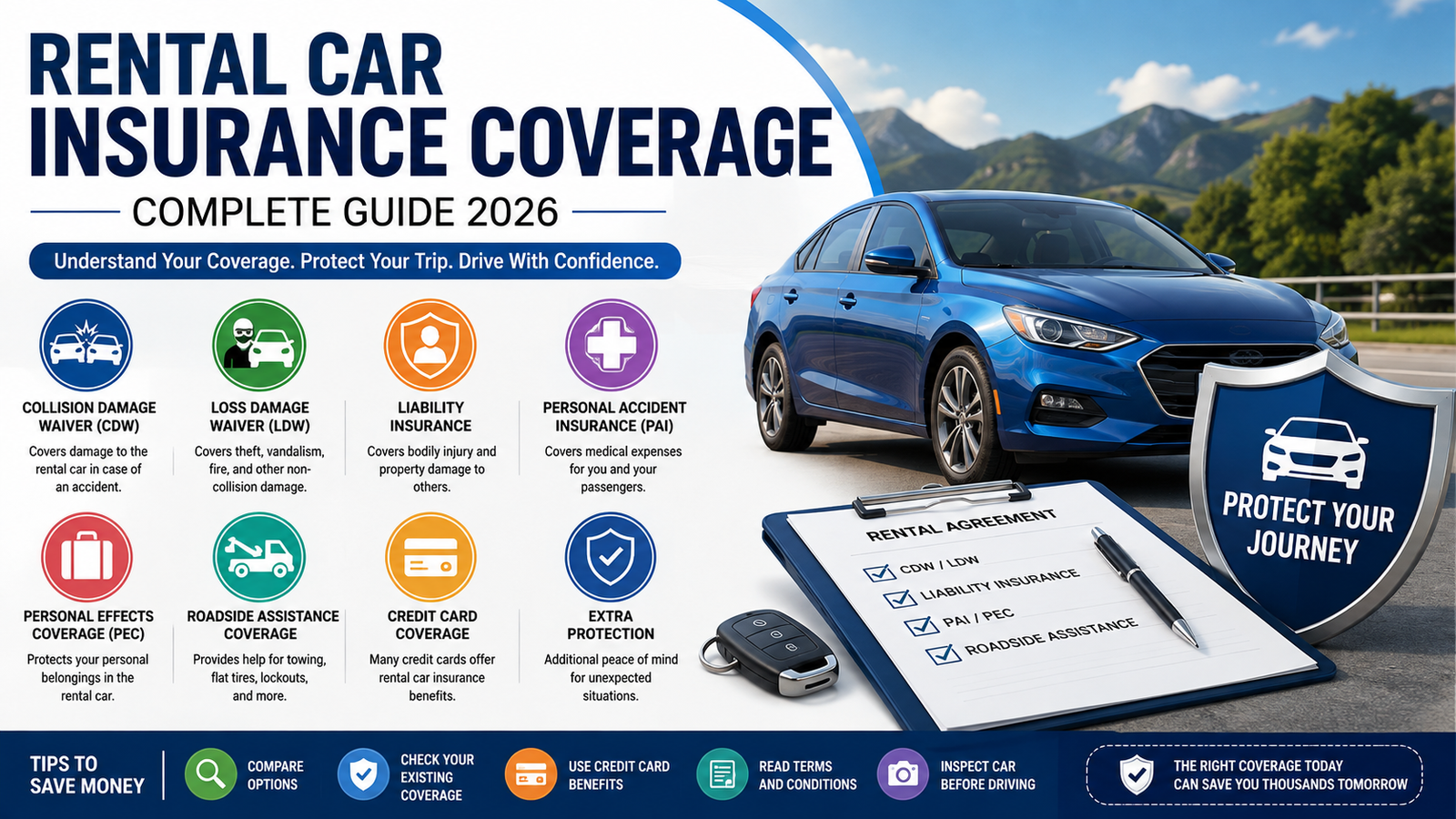
1. Collision Damage Waiver (CDW) / Loss Damage Waiver (LDW)
The Collision Damage Waiver (CDW) or Loss Damage Waiver (LDW) is the most common protection offered by rental companies.
Although it is called a “waiver” rather than insurance, it typically waives your responsibility for damage to the rental vehicle if it is damaged or stolen, subject to the agreement’s terms.
Usually Covers
- Collision damage
- Vehicle theft
- Fire damage
- Vandalism
- Weather-related damage
May Not Cover
- Driving under the influence
- Unauthorized drivers
- Off-road driving
- Intentional damage
- Certain prohibited uses listed in the rental agreement
2. Liability Insurance
Liability insurance pays for injuries or property damage you cause to other people while driving the rental vehicle.
Coverage generally includes:
- Bodily injury liability
- Property damage liability
- Legal defense costs (subject to policy terms)
Many U.S. states require minimum liability coverage, but the amount included with a rental vehicle varies.
3. Personal Accident Insurance (PAI)
Personal Accident Insurance helps cover medical expenses resulting from an accident.
It may include:
- Emergency medical treatment
- Ambulance services
- Hospital expenses
- Accidental death benefits
4. Personal Effects Coverage (PEC)
This coverage protects your personal belongings inside the rental vehicle.
Items commonly covered include:
- Luggage
- Clothing
- Electronics
- Travel bags
- Cameras
Coverage limits and exclusions vary, so check the policy details.
5. Roadside Assistance Protection
Many rental companies also offer roadside assistance.
It may include:
- Flat tire assistance
- Battery jump-start
- Lockout service
- Fuel delivery
- Towing assistance
How Much Does Rental Car Insurance Cost?
Costs vary depending on the rental company, vehicle type, location, and coverage selected.
| Coverage Type | Average Daily Cost |
|---|---|
| Collision Damage Waiver (CDW/LDW) | $10–$30 |
| Supplemental Liability Insurance | $8–$20 |
| Personal Accident Insurance | $3–$10 |
| Personal Effects Coverage | $2–$7 |
| Roadside Assistance | $4–$10 |
The total cost can range from $15 to $60 or more per day, depending on the options you choose.
Does Your Personal Auto Insurance Cover Rental Cars?
Many personal auto insurance policies extend certain coverages to rental vehicles used for personal travel.
If your policy includes:
- Collision coverage
- Comprehensive coverage
- Liability insurance
it may also apply to a rental car, subject to your policy’s terms, limits, deductibles, and exclusions.
Always confirm with your insurance company before declining the rental company’s coverage.
Does a Credit Card Cover Rental Cars?
Many travel-focused credit cards provide rental car benefits when you:
- Pay for the rental using the eligible card.
- Decline the rental company’s collision damage waiver, if required by the card’s terms.
Coverage differs by card and issuer. Some cards offer secondary coverage, while others provide primary coverage in eligible situations.
Always read your card’s benefit guide before relying on it.
What Rental Car Insurance Usually Does Not Cover
Most rental protection plans exclude certain situations.
Common exclusions include:
- Intentional damage
- Driving while intoxicated
- Racing or reckless driving
- Unauthorized drivers
- Mechanical breakdowns unrelated to an accident
- Damage caused by violating the rental agreement
- Off-road use where prohibited
Read the rental contract carefully before signing.
Is Rental Car Insurance Worth It?
It may be worth considering if:
- You don’t own a personal auto insurance policy.
- You’re traveling internationally and your existing policy doesn’t apply.
- Your credit card doesn’t provide rental protection.
- You want additional financial protection and peace of mind.
- You’re renting an expensive or luxury vehicle.
If your existing insurance and credit card already provide adequate protection, you may not need to purchase every optional product.
Tips to Save Money on Rental Car Insurance
Compare Before You Travel
Review your personal auto policy and credit card benefits before arriving at the rental counter.
Avoid Duplicate Coverage
Don’t pay twice for protection you already have.
Understand Deductibles
Know how much you’ll pay out of pocket before insurance applies.
Inspect the Vehicle
Take photos and videos before driving away to document any existing damage.
Read the Rental Agreement
Understanding the contract can prevent unexpected charges later.
Rental Car Insurance vs Personal Auto Insurance
| Feature | Rental Company Coverage | Personal Auto Insurance |
|---|---|---|
| Collision Protection | Usually Available | Often Included (if your policy has collision) |
| Liability Protection | Available | Usually Included |
| Theft Protection | Often Included with LDW/CDW | Often Included with comprehensive coverage |
| Personal Belongings | Optional | May require homeowners or renters insurance |
| Daily Cost | Additional | Already included in your premium |
Frequently Asked Questions
Is rental car insurance mandatory?
Not usually. Requirements vary by location and rental company. However, you remain responsible for meeting any legal insurance requirements.
Can I decline rental car insurance?
Yes, if you have sufficient coverage through your personal auto insurance or an eligible credit card and are comfortable relying on that coverage.
Does rental car insurance cover theft?
Collision Damage Waiver or Loss Damage Waiver often includes theft protection, but the exact terms vary by provider.
Does my credit card provide rental insurance?
Some credit cards do, but benefits, exclusions, and eligibility differ. Check your card’s benefit guide before your trip.
What happens if I damage a rental car?
You may be responsible for repair costs, deductibles, or other charges depending on your insurance, the rental agreement, and the type of coverage you have.
Final Thoughts
Rental car insurance coverage can protect you from significant financial losses if an accident, theft, or other unexpected event occurs during your rental period. Before accepting or declining optional coverage, compare it with your personal auto insurance and any benefits available through your credit card. Understanding your existing protection can help you avoid unnecessary costs while ensuring you have the coverage you need.